Sucking pests are a major challenge in vegetable farming, reducing crop health and yield. While chemical pesticides are commonly used, their risks have encouraged safer alternatives. Sticky traps offer an effective, eco-friendly solution for managing these pests.
Trap is any device that impedes or stops the progress of an organism (Insect). Its widely use in entomology. Traps may function with or without baits, lures, or other attractants, and their effectiveness depends on factors such as design, placement, time of day or season, weather, temperature and the type of attractant used. Sticky traps make it easy to detect, monitor, and capture pest populations in farms.
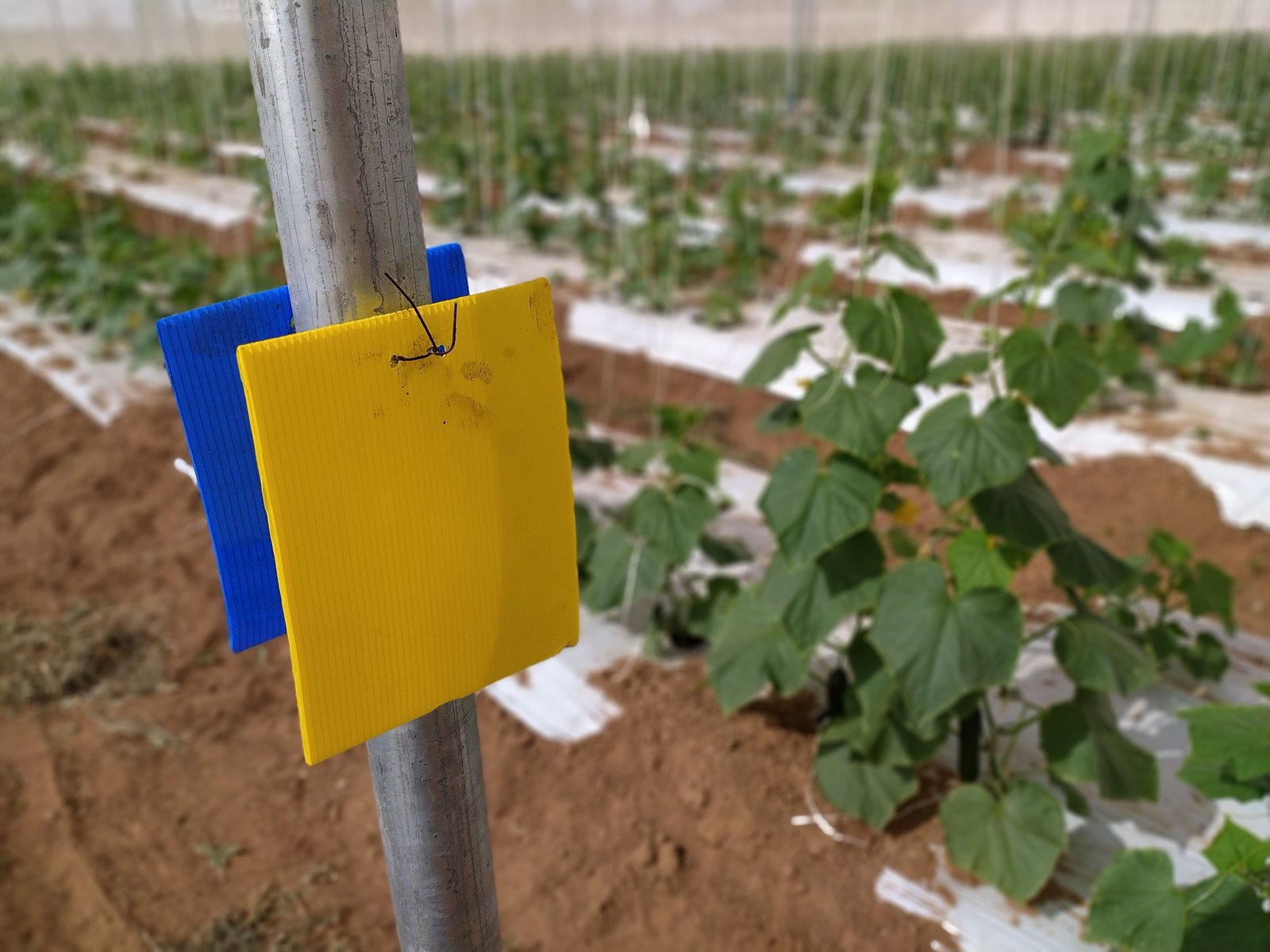
Advantages of Sticky Traps in Agriculture
-
- Early detection: Help monitor pest infestations for timely action.
- Supports IPM: Provide data for better decisions, reducing pesticide use and promoting sustainable crop protection.
- Eco-friendly: Reduce reliance on chemical pesticides and minimize residues.
- How Sticky Traps Work
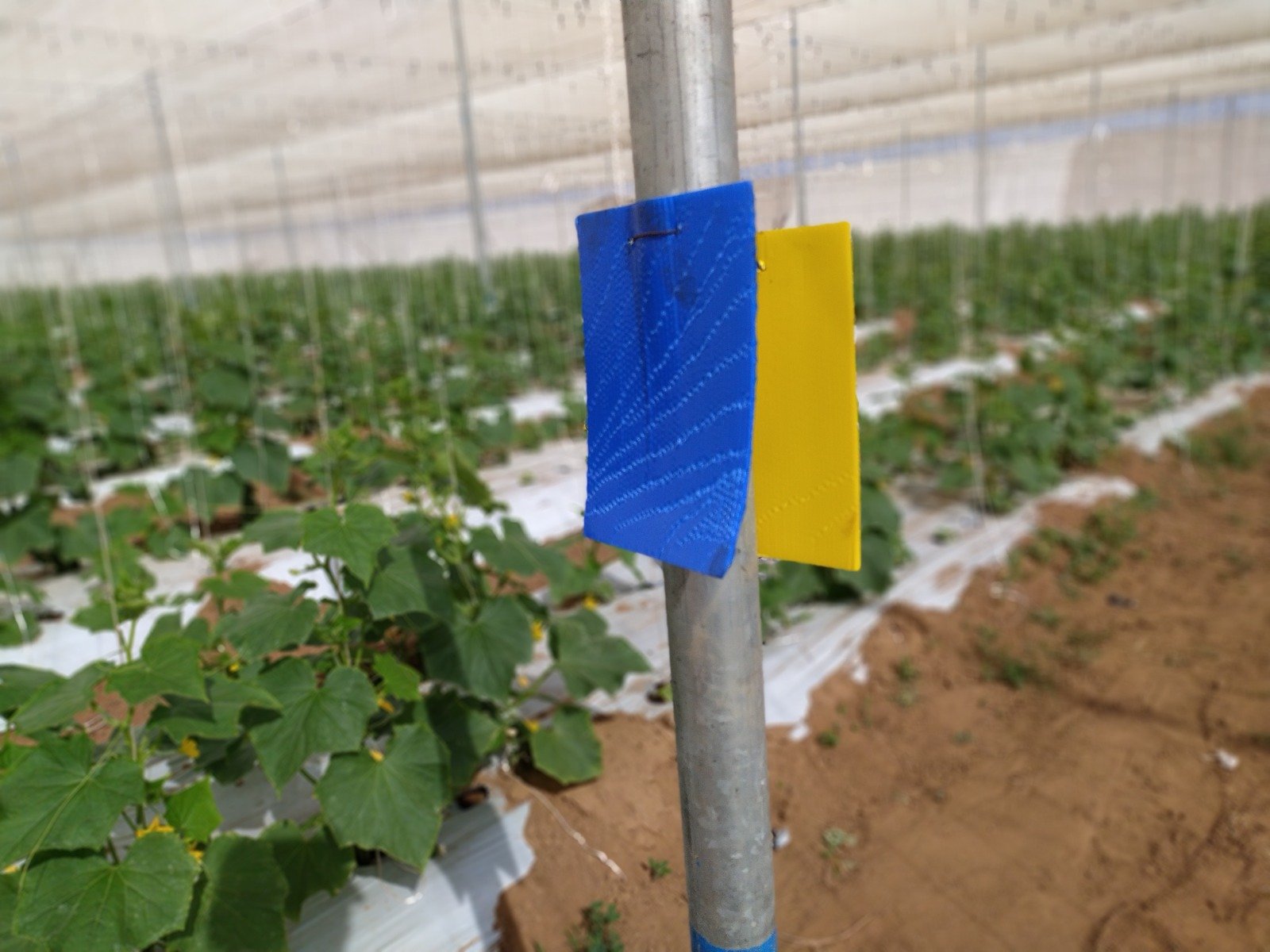
Sticky traps use bright colour or pheromones to attract flying insects. The adhesive surface captures and immobilizes them, helping monitor pest populations and reduce their numbers. Regular inspection provides valuable data for early action, lowering crop damage and reducing pesticide use.
- Application Technique
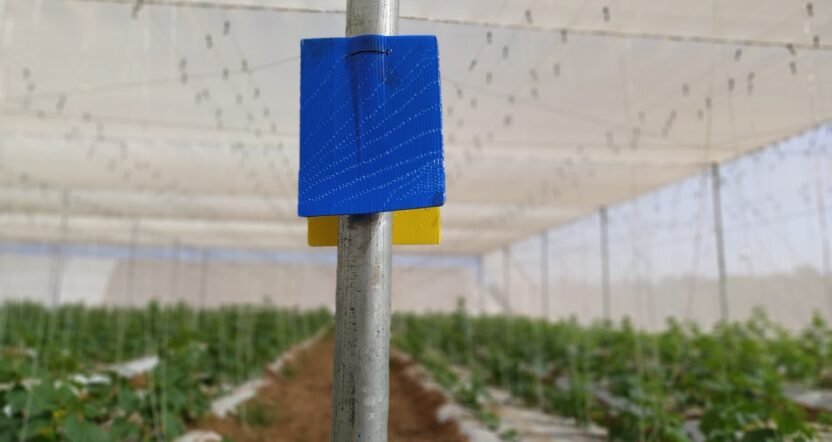
Placement: Hang traps at crop height, especially near field edges and pest hotspots, considering wind and pest behaviour.
Density: Use about one trap per 100 m² area. In one acer area 40-50 trap are sufficient to monitor insect population.
Selection: Choose trap colour suited to target pests. It is available in different colour like yellow, blue, white black etc. Commonly yellow and blue traps are used for its ability to attract wide range of insects.
Monitoring: Inspect regularly, clean or replace when necessary, and record captures for better pest management.
- Yellow Colour Sticky Traps
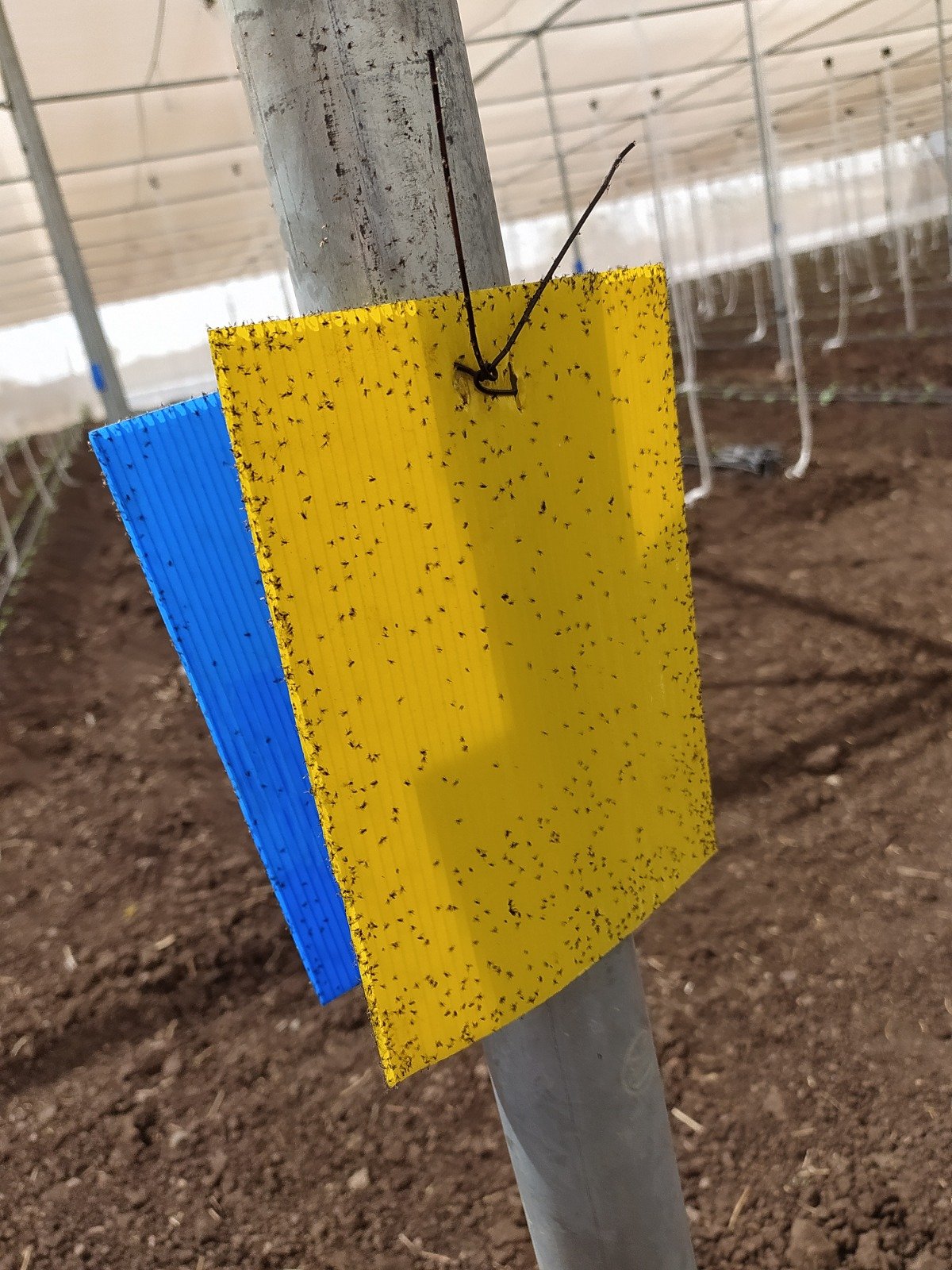
Yellow sticky traps are among the most widely used in agriculture. Their bright yellow color strongly attracts a wide range of flying insects such as aphids, whiteflies, mealybug, and green hopper. By exploiting the natural preference of these pests for yellow, the traps lure them onto the adhesive surface, where they are captured and prevented from causing further damage. yellow, sticky traps provide an efficient way to monitor and control their populations, thereby reducing crop losses and maintaining healthier plants.
- Blue Colour Sticky Traps
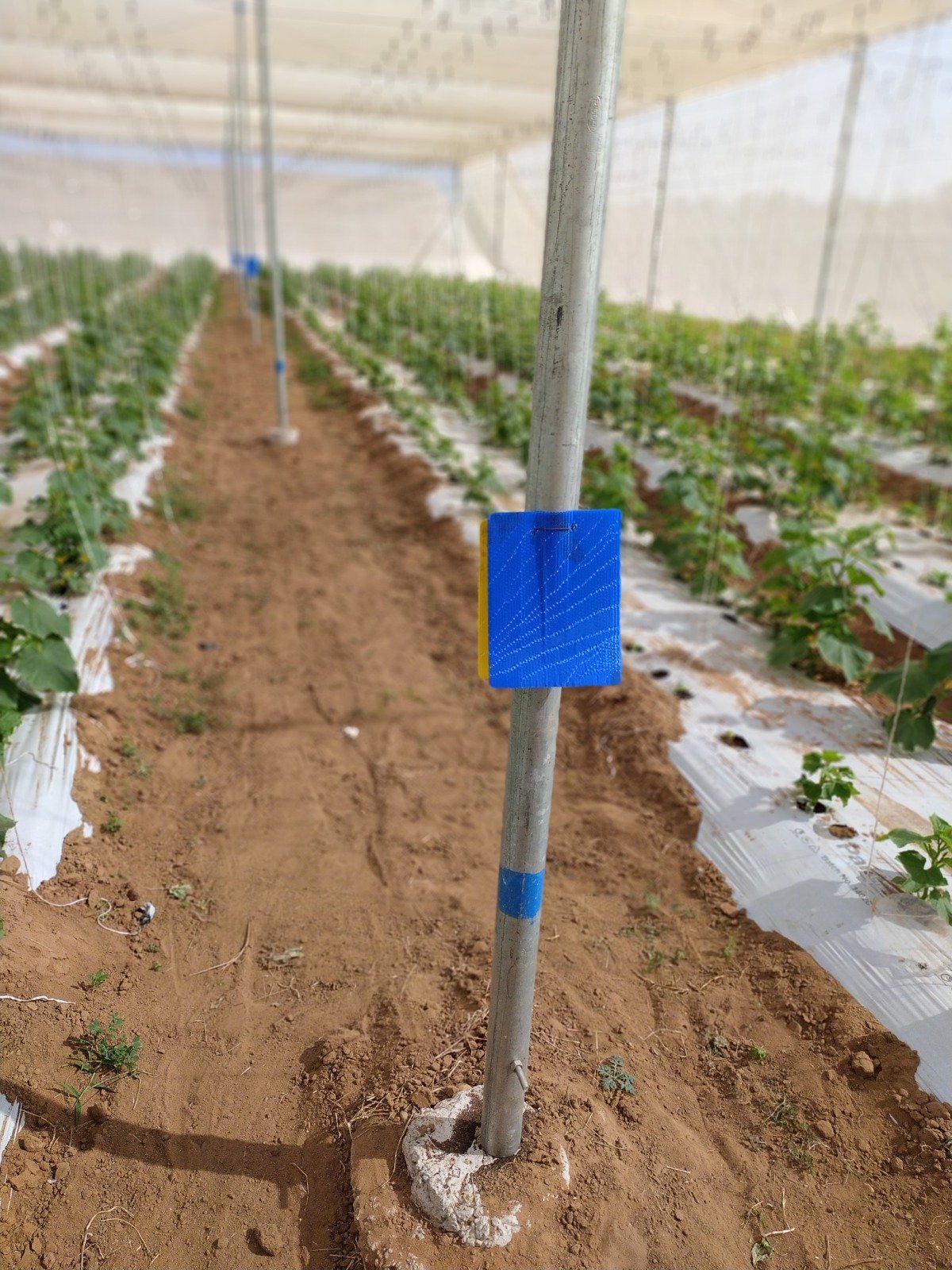
Blue sticky traps are increasingly used in agriculture for their ability to attract and capture specific pests, particularly thrips and leaf miner adults. The blue colour is especially appealing to these insects, drawing them onto the adhesive surface where they are trapped and prevented from damaging crops. Suitable for use in both vegetable and ornamental crops.
- White Colour Sticky Traps
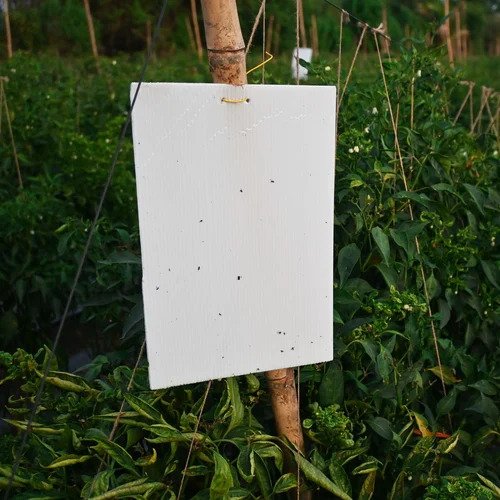
White sticky traps are less commonly used than yellow or blue traps but provide distinct benefits in specific agricultural settings. While they are not as attractive to flying insects, their reflective surface makes them particularly effective against crawling pests such as aphids, mites, and other ground-moving insects.
📞 𝗙𝗼𝗿 𝗶𝗻𝗾𝘂𝗶𝗿𝗶𝗲𝘀, 𝗰𝗼𝗻𝘁𝗮𝗰𝘁 𝘂𝘀:
📱 𝖬𝗈𝖻𝗂𝗅𝖾 & 𝖶𝗁𝖺𝗍𝗌𝖠𝗉𝗉: +𝟫𝟣 𝟫𝟫𝟩𝟦𝟫 𝟣𝟩𝟦𝟣𝟦
📧 𝖤𝗆𝖺𝗂𝗅: 𝗂𝗇𝖿𝗈@𝗃𝗁𝖺𝗀𝗋𝗂𝗂𝗇𝖿𝗋𝖺.𝖼𝗈𝗆
🌐 𝖶𝖾𝖻𝗌𝗂𝗍𝖾: www.jhagriinfra.com