Why Protected Farming is Growing in India
1. Better Crop Management and Quality
One of the main benefits of Protected Cultivation is better control over the crop environment.
Drip irrigation, fertigation, ventilation, shading, trellising, and crop-support systems can be planned according to crop requirements.
Protected structures can also reduce exposure to certain weather conditions and external factors that may affect crop growth and produce quality.
Key benefits include:
- Better water and nutrient management
- Reduced exposure to certain weather stresses
- Better crop training and trellising
- Efficient use of growing space
- Reduced exposure to some external pests
- More uniform crop development
- Better produce presentation and grading
Suitable crops may include tomato, cucumber, capsicum, flowers, leafy vegetables, herbs, and nursery plants, depending on the structure and local conditions.
A polyhouse or greenhouse does not automatically guarantee higher production or quality. Results depend on crop variety, irrigation, nutrition, climate management, crop protection, labour, and overall crop management.
2. Efficient Water Management with Drip Irrigation and Fertigation
Water management is an important part of modern protected cultivation projects.
Drip irrigation delivers water close to the crop root zone, helping farmers control irrigation quantity and timing. Fertigation allows suitable nutrients to be supplied through the irrigation system according to crop requirements.
This can support:
- Precise water application
- Better soil-moisture management
- Reduced unnecessary water application
- Irrigation scheduling
- Better nutrient management
- Efficient use of available water
Actual water savings depend on the crop, soil, climate, irrigation design, water quality, and management practices.
Water quality should also be checked because salinity, hardness, pH, and suspended particles can affect irrigation equipment and crop performance.
3. Protection from Weather, Pests and Diseases
Weather conditions such as heavy rainfall, hail, strong winds, excessive sunlight, frost, and extreme temperatures can affect crop production.
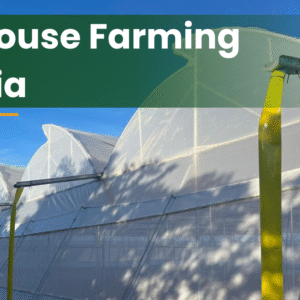
Protected farming structures can reduce exposure to several external conditions. The level of protection depends on the structure’s design and specifications.
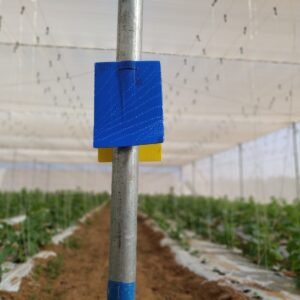
Insect-proof netting can also help reduce the entry of several insect pests.
However, protected cultivation does not completely eliminate pests and diseases. Proper ventilation, sanitation, crop monitoring, and timely crop protection remain essential.
The structure provides a physical layer of protection, while proper crop management helps maintain the growing environment.
Extended and Off-Season Cultivation
One reason farmers consider protected farming in India is the possibility of extending the cultivation period for suitable crops.
Depending on the crop, structure, and local climate, production may be started earlier, continued later, or planned during periods when open-field conditions are less suitable.
This can support:
- Extended cultivation periods
- Selected off-season production
- Better crop-cycle planning
- More regular harvesting
- Better utilisation of the protected structure
However, year-round cultivation is not suitable for every crop. Temperature, humidity, light, ventilation, water, and crop-specific requirements must be considered.
The crop, structure, production period, and market should therefore be planned together.
Efficient Use of Land and Trellising
Limited agricultural land makes efficient space utilisation important.
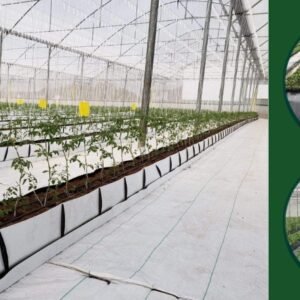
Protected Cultivation can support planned plant spacing, vertical crop training, and trellising systems. Crops such as cucumber, tomato, and capsicum can use available vertical space when suitable support systems are provided.
A properly designed trellising system helps maintain organised crop growth and provides support throughout the crop cycle.
This makes land utilisation an important consideration when planning a commercial protected farming project.
Market Demand and Crop Selection
Protected farming is also connected to the growing demand for quality, consistency, and regular supply of horticultural produce.
Depending on the project, farmers may target:
- High-value vegetables
- Flowers
- Herbs and leafy greens
- Nursery plants
- Specialty crops
- Organised retailers
- Hotels and restaurants
- Food processors
- Institutional buyers
- Wholesalers and exporters
However, crop selection should always begin with market research.
Before planting, farmers should understand:
- Who will buy the produce?
- What quality and quantity are required?
- What are the expected selling prices?
- What are transportation and packing costs?
- When is demand highest?
- What competition exists?
A protected structure alone does not guarantee profitability. Crop selection, production cost, market demand, and selling conditions must be evaluated together.
Choosing the Right Protected Cultivation Structure
There is no single best protected cultivation structure for every farmer.
Common options include:
- Naturally Ventilated Polyhouse
- Fan & Pad Cooling Polyhouse
- Shade Net House
- Dome-Shaped Shade Net House
- Flat Roof Shade Net House
- Single-Span Poly Tunnel
- Multi-Span Poly Tunnel
- Orchard Protection Structures
The selection should consider:
Crop + Climate + Land + Water + Ventilation + Investment + Production Objective
For example, a crop requiring strong natural ventilation may require a different structure from a crop requiring greater environmental control.
Therefore, farmers should select the structure according to their specific crop and project requirements, rather than simply choosing the lowest-cost structure.
Protected Farming Project Planning
A successful protected farming project requires planning beyond the structure itself.
Before construction, important factors include:
- Land suitability
- Soil and water testing
- Local climate
- Crop selection
- Protected structure selection
- Irrigation and fertigation
- Trellising requirements
- Drainage
- Electricity
- Labour
- Market access
- Transportation
- Initial investment
- Working capital
- Maintenance
A Detailed Project Report (DPR) can help organise the technical and financial aspects of the project.
The project cost should consider the structure, irrigation, fertigation, planting material, crop-support systems, labour, electricity, maintenance, working capital, and other operating expenses.
Government Subsidy and Finance for Protected Cultivation
Government schemes may provide financial assistance for eligible protected cultivation projects. However, eligibility, applicable structures, assistance, and conditions can vary according to the scheme, state, project size, farmer category, and current government guidelines.
Farmers should verify the latest applicable requirements regarding:
- Eligible structures
- Subsidy norms
- Farmer eligibility
- Technical specifications
- Required documents
- Approval and inspection
- Bank finance requirements
Banks and financial institutions may also provide agricultural or project-based finance depending on project viability, documentation, repayment capacity, and applicable lending policies.
Subsidy or finance should not be considered the only reason to invest. The complete project economics and operating costs should be evaluated first.
Protected Cultivation Solutions by JH Agriinfra
JH Agriinfra Projects LLP provides protected cultivation solutions from planning and design to manufacturing and installation.
Our solutions include:
- Polyhouse and greenhouse structures
- Net houses and shade net houses
- Poly tunnels
- Irrigation and fertigation systems
- Trellising systems
- Crop-support systems
- Customised protected cultivation structures
We develop solutions based on crop requirements, local climate, land conditions, project specifications, and client requirements.
With experience in domestic and international projects, JH Agriinfra also provides customised protected cultivation structures and project solutions for overseas clients.
Our focus is on practical project planning, suitable structure selection, customised design, and complete installation support.
FAQ
What is Protected Farming in India?
Protected Farming is a cultivation method in which crops are grown under structures such as polyhouses, net houses, shade net houses, and poly tunnels to provide greater control over growing conditions.
What are the main benefits of Protected Cultivation?
The main benefits include better environmental management, efficient irrigation, protection from certain weather conditions, improved crop management, better use of land, and opportunities for planned cultivation.
Which crops are suitable for Protected Farming?
Suitable crops can include tomato, cucumber, capsicum, flowers, leafy vegetables, herbs, nursery plants, and selected specialty crops depending on the structure, climate, and market.
How do I choose a Protected Cultivation structure?
The structure should be selected according to the crop, local climate, rainfall, wind, temperature, ventilation requirements, water availability, investment, and production objective.
Is subsidy available for Protected Cultivation?
Government assistance may be available for eligible projects, but the applicable subsidy and eligibility depend on current government guidelines, location, structure, and project conditions.
Can JH Agriinfra design and install customised protected structures?
Yes. JH Agriinfra Projects LLP provides planning, design, manufacturing, installation, and customised Protected Cultivation solutions for domestic and international projects.